Minecraft: Education Edition gave our Year 10s a digital canvas to bring the principles of vocation and social justice to life
Using Minecraft: Education Edition as a learning tool in our Year 10 Religious Education class has given students a meaningful way to engage with a lesson on vocation and its connection to Catholic Social Teaching (CST).
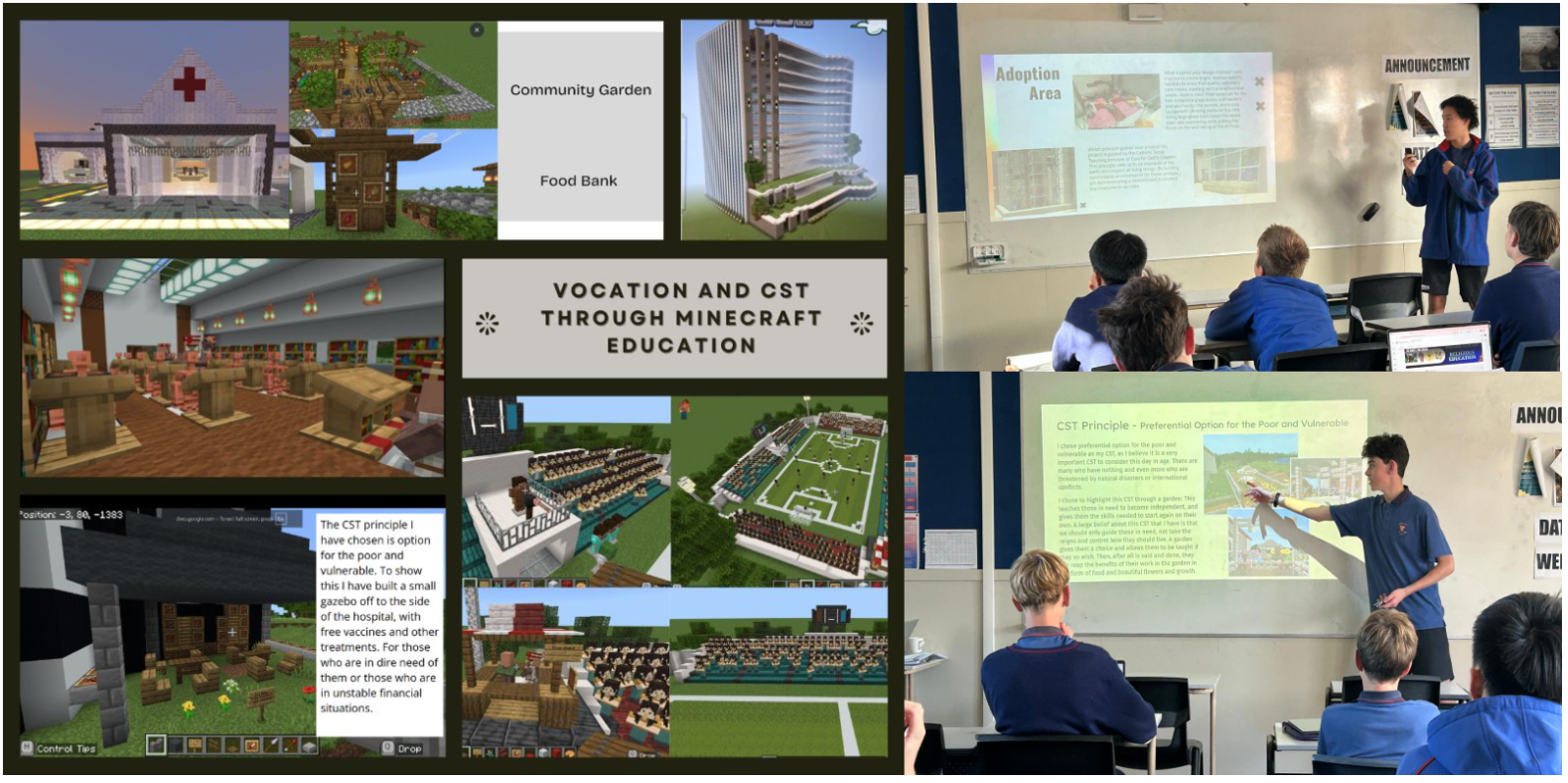
In this learning experience, students reflected on the question: “What is God calling me to be, and how can my future vocation serve others?” Through Minecraft, they designed and built representations of their chosen vocations. These included hospitals, stadiums, veterinary clinics, community spaces, and places of worship, among others. Each build was linked to a principle of Catholic Social Teaching they had chosen.
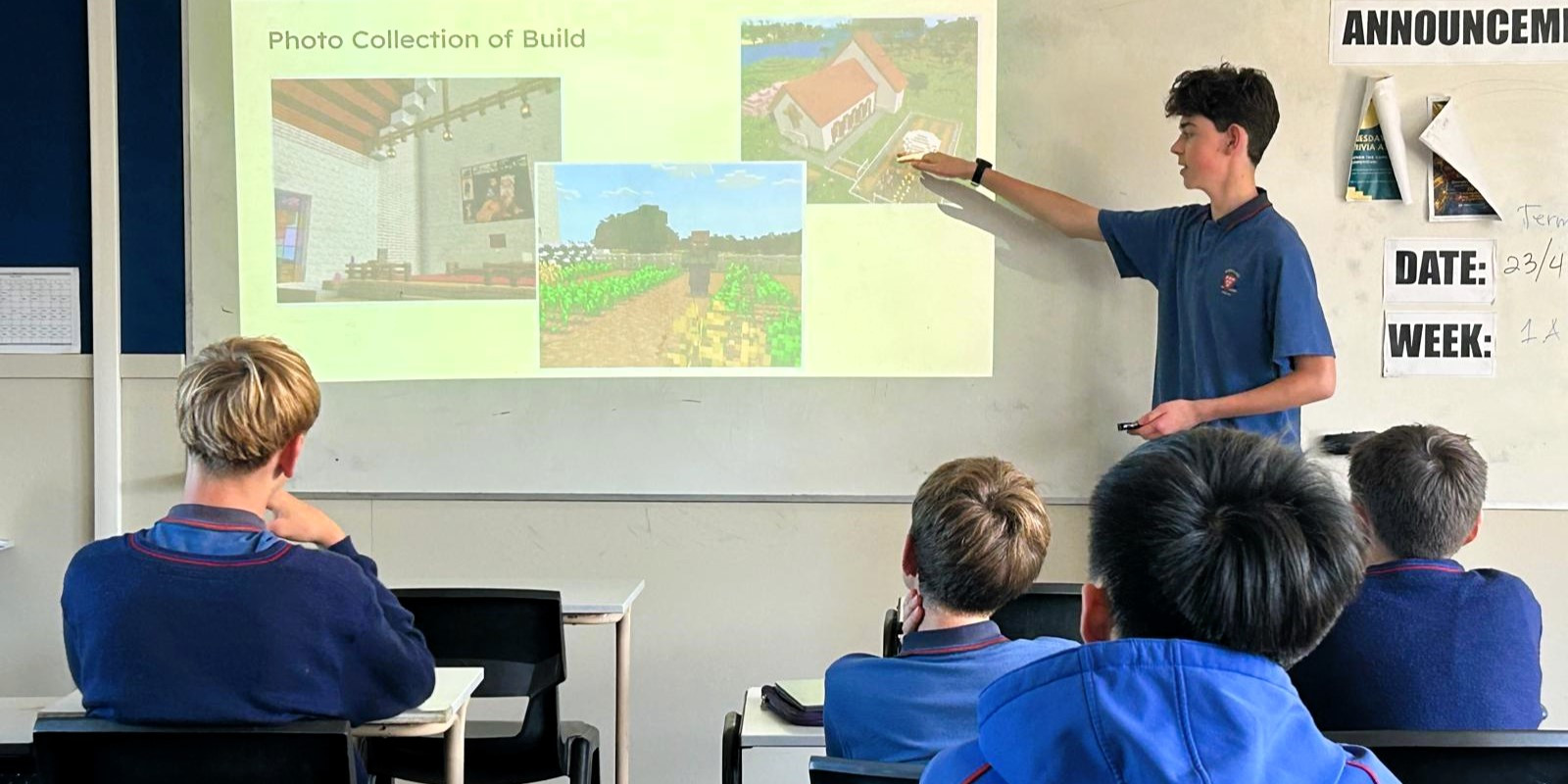
This approach allowed students to move beyond written reflection into a more visual and interactive form of learning. During presentations, they explained how their designs reflected ideas such as the dignity of work, care for others, solidarity, and the common good.
For example, James Andrew (10 LCR) explained that “The CST that my build shows is an option for the poor. This is shown from the fact that the stadium is open to the public and has no limits on who can use it. This means you don't have to pay to use pitches or get told off after jumping the fence to use one. I chose this CST because I know how annoying it is to not have public pitches open for me to use, so I chose to build the stadium so others will have access to a football pitch.”
Another student, Maison Farr (10 MRT), chose the principle of Care for Creation. He explained:
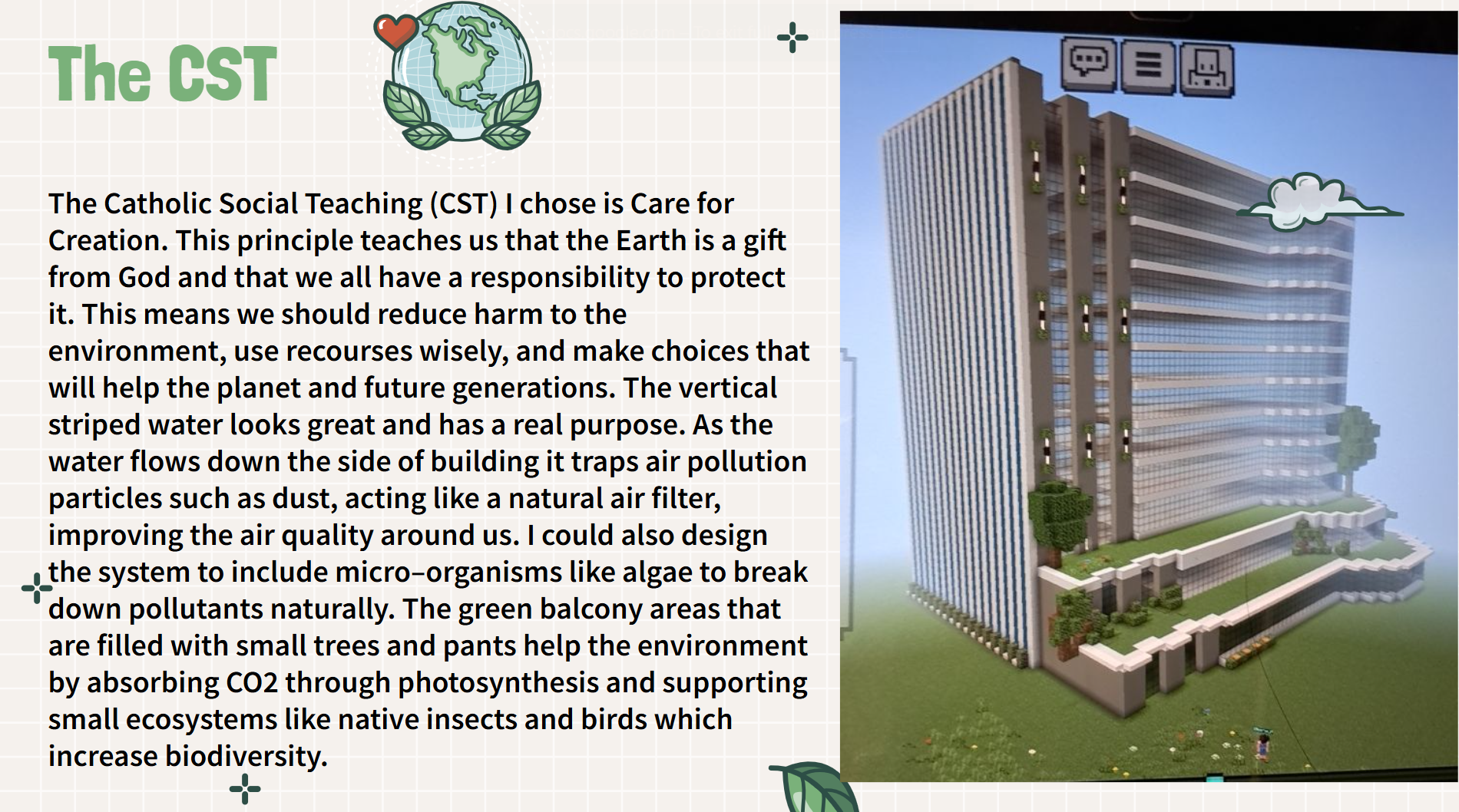
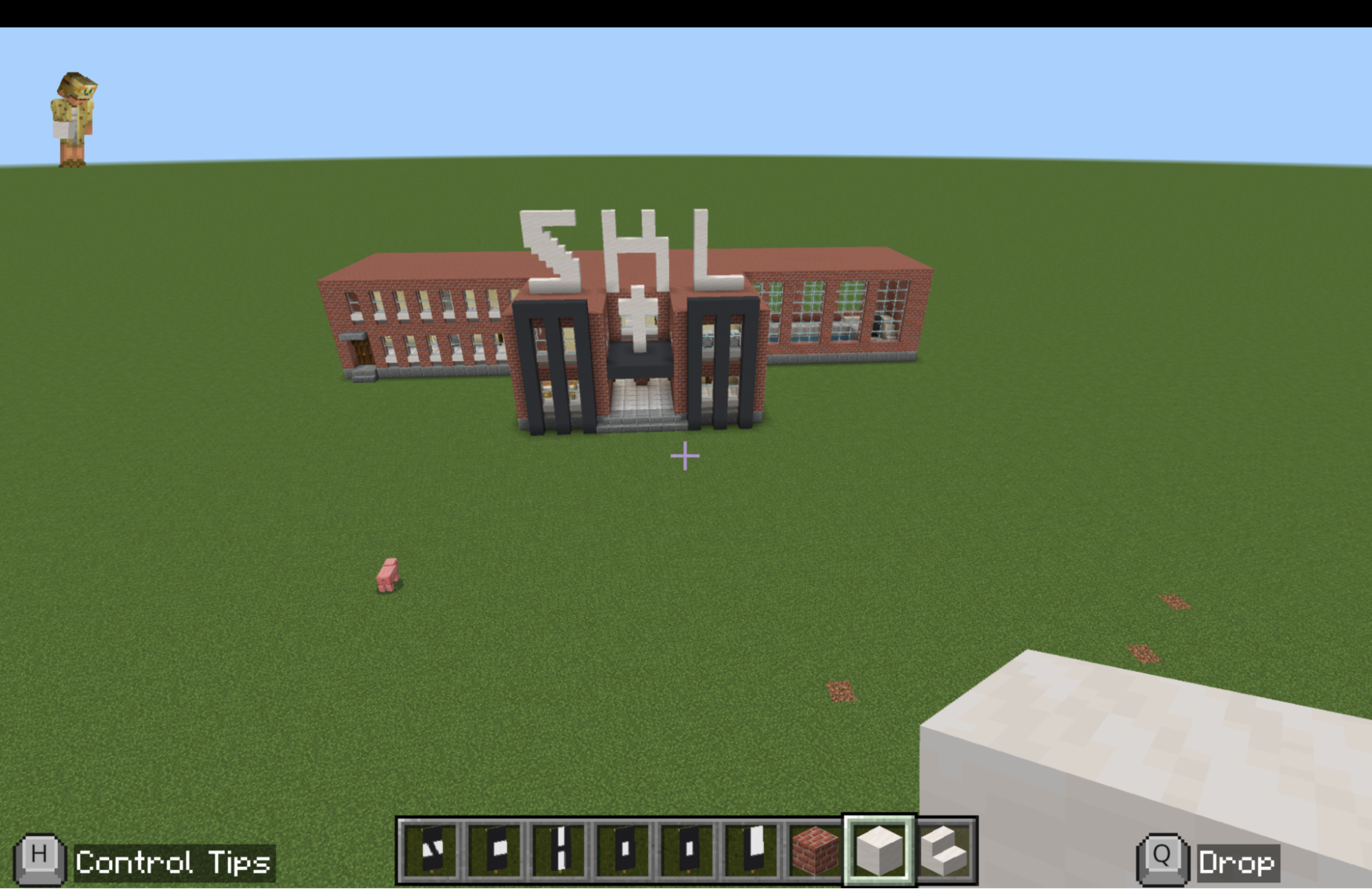
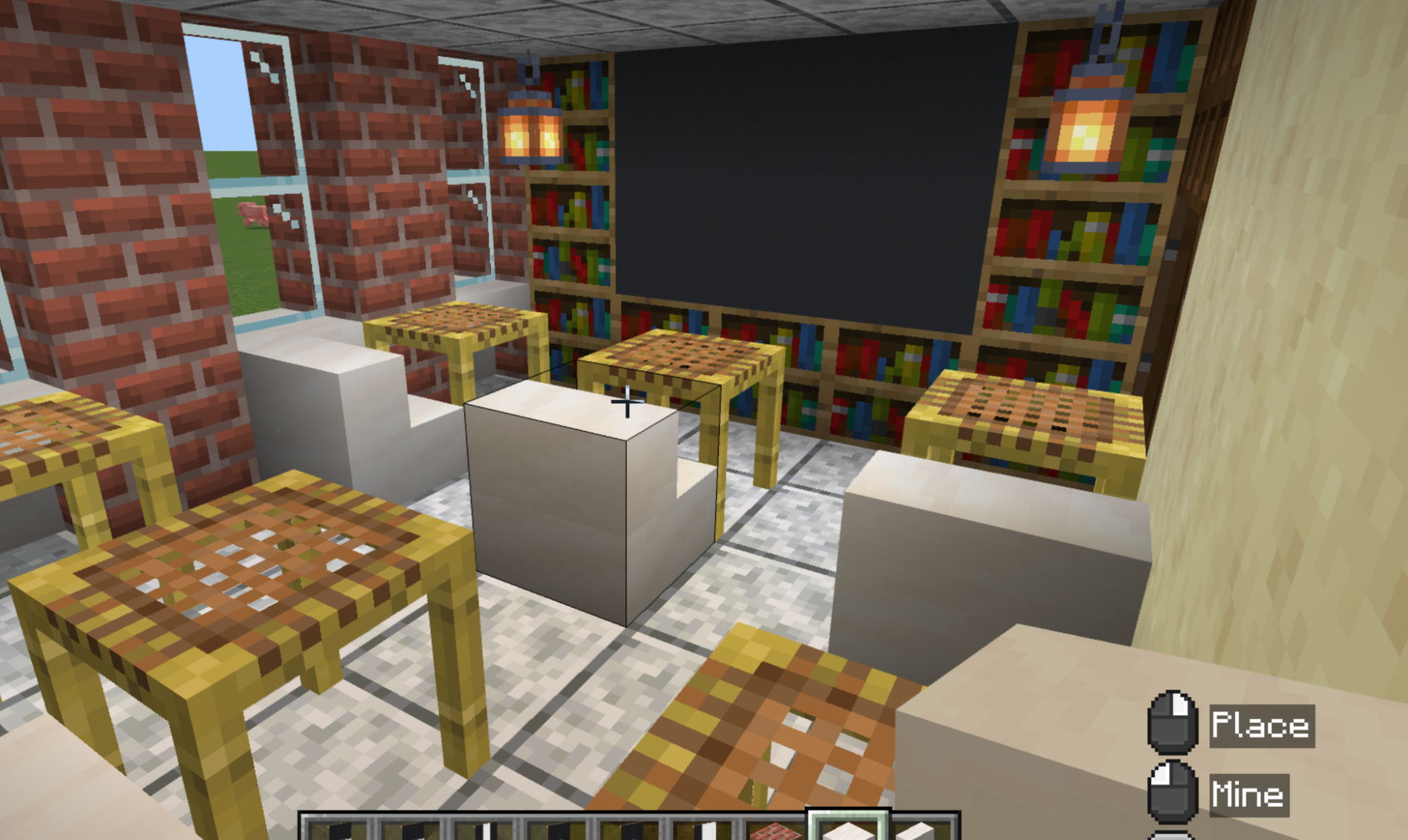
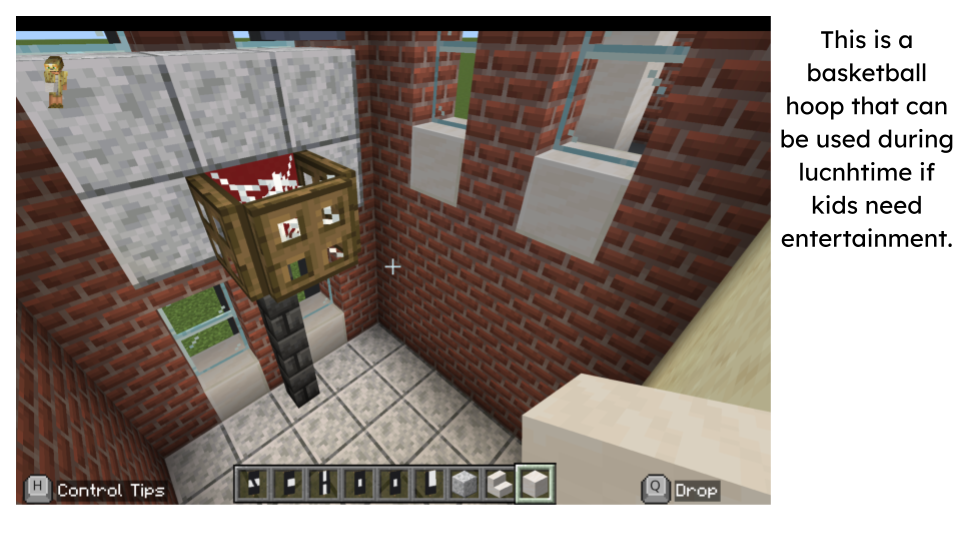
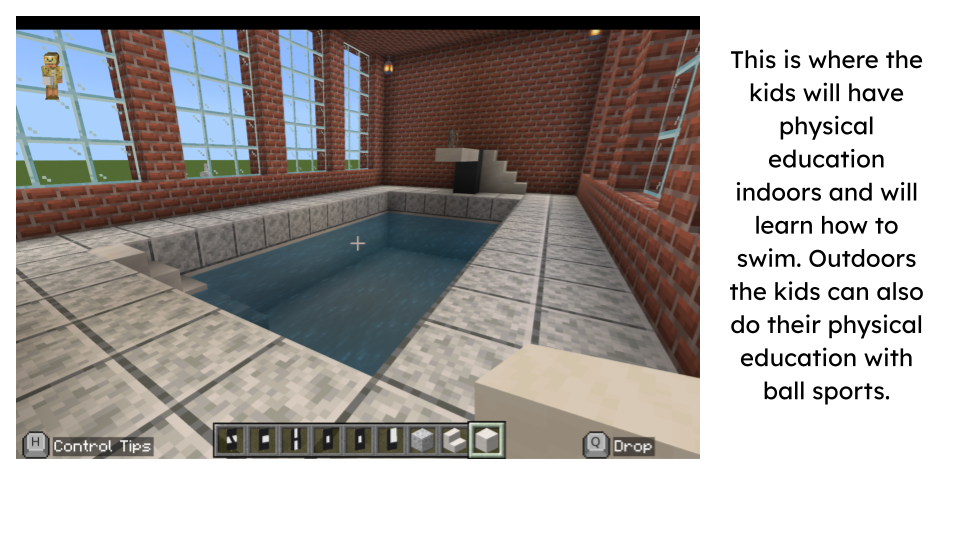
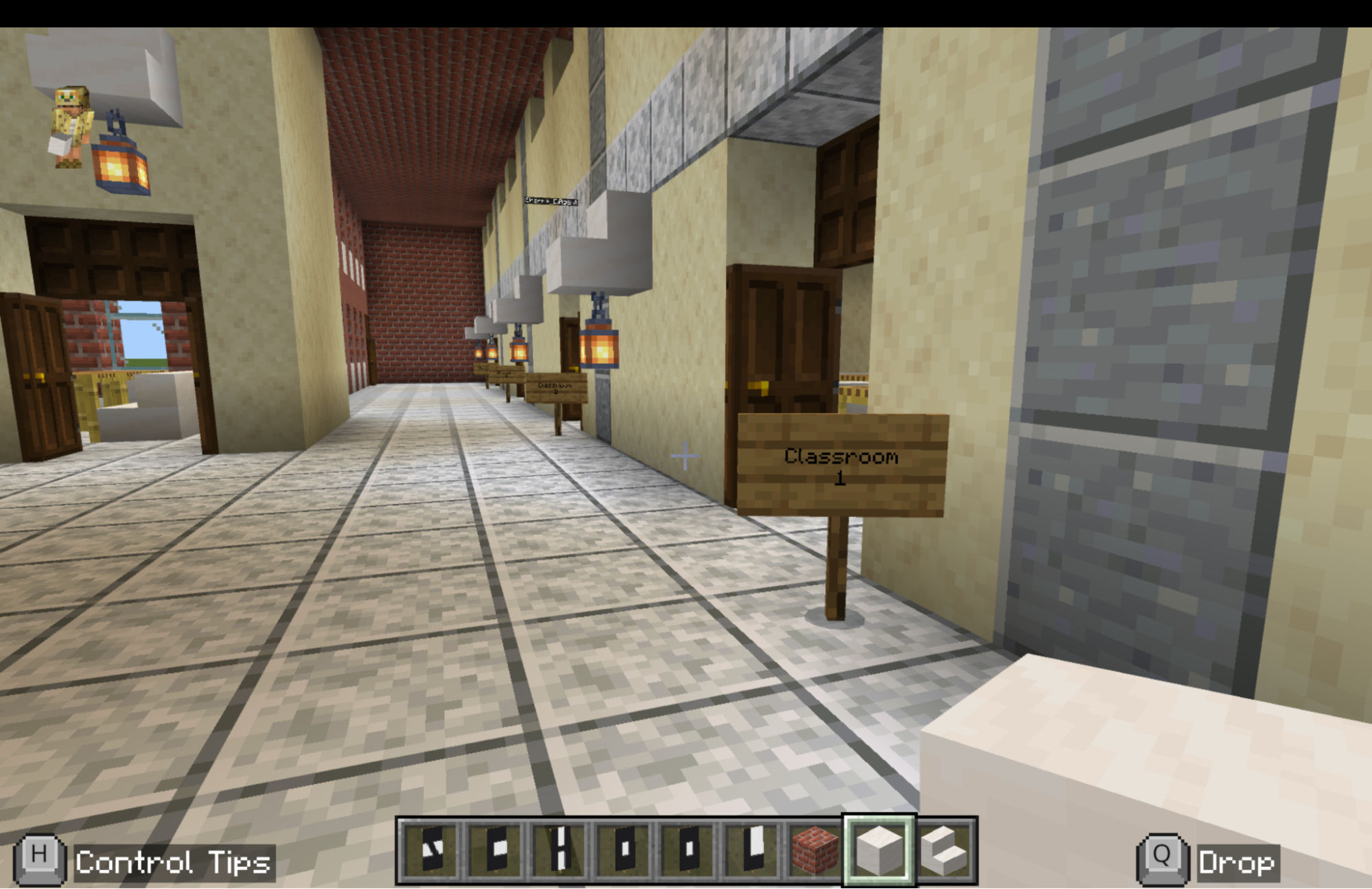
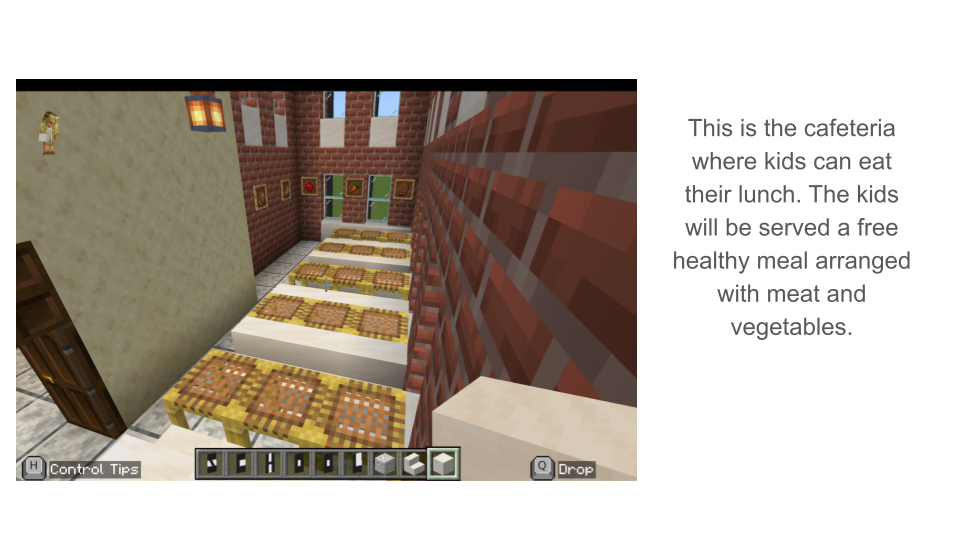
The activity encouraged students to consider how their future choices can serve others. As St. John Paul II reminds us, “The future starts today, not tomorrow.” By connecting vocation with CST, students reflected on how their gifts and talents can be used in service of others, highlighting responsibility, care, and faith in action. A practical example of this is the school project designed by Eshaan Sharma (10RMK).
“The goal of my project is to provide education by building a school in Niger for those who can’t afford it and don't have access to it. I chose this specific building as I know many areas in the world don’t have schooling leading their future citizens to be uneducated which is something I want to change. I also chose this as since my dream to be a construction manager it’s a way to use it as a way to change the lives of others. Niger as a country itself is the country with the least amount of education in the world and if it’s not focused on now the future of the country will plummet. I chose the CST principle of Preferential Option for the Poor and Vulnerable. I chose this as it relates to the idea of giving out to the poor and those in need as it’s an option that they have.”
This learning experience showed how digital tools, when used purposefully, can support student understanding and help connect faith with real-life contexts.
Mrs. Taloy
RE Teacher